

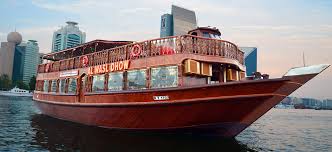
The history of dhow cruises in Dubai is rooted in the rich maritime heritage of the Arabian Gulf, where traditional dhow boats once served as the backbone of the region’s trade and economy. Today, these historic vessels have been transformed into luxurious floating restaurants and sightseeing boats, offering tourists and locals an unforgettable experience on Dubai’s serene waters.
Origins of the Dhow: A Symbol of the Arabian Gulf
The dhow is a traditional wooden boat that has been used for centuries across the Arabian Peninsula, particularly in the UAE, Oman, and other Gulf countries. Historically, dhows played a vital role in the economic and social development of the region.
1. Pearl Diving and Fishing
- Before the discovery of oil, the Arabian Gulf’s economy relied heavily on pearling, fishing, and trade. Dhows were primarily used by local sailors, known as “nakhudas”, for pearl diving expeditions and deep-sea fishing trips. These sturdy, hand-crafted boats could withstand long journeys, carrying divers and fishermen to rich waters far from the coast.
2. Trade Routes Across the Indian Ocean
- Dhows were also central to maritime trade routes that connected the Arabian Peninsula with Africa, India, and Southeast Asia. Merchants used these boats to transport goods such as spices, textiles, and precious metals. The dhow’s distinctive design, featuring a triangular sail, allowed it to navigate strong winds and currents, making it ideal for long-haul journeys across the Indian Ocean.
3. Types of Dhows
- There are several types of dhows, each serving a specific purpose:
- Boums: Large vessels used for long-distance trading.
- Sambuks: Smaller, faster dhows used for pearl diving and fishing.
- Jalibut: Designed for short trips along the coast.
Evolution of Dhows in Dubai
As Dubai transformed from a small fishing village into a bustling metropolis, the role of dhows evolved along with it. By the mid-20th century, the dhow was no longer the mainstay of Dubai’s economy, as the region’s oil wealth began to fuel modern development. However, rather than fading into history, dhows found new life in the tourism industry.
1. Dubai Creek and Trade
- Dubai Creek, the heart of old Dubai, became a hub of commerce where dhows docked to load and unload goods from across the globe. Even today, traditional dhows can still be seen transporting cargo along Dubai Creek, connecting the city with neighboring Gulf countries.
2. Tourism and the Transformation of Dhow Cruises
- With Dubai’s rapid rise as a global tourist destination, the dhow was repurposed as a symbol of the city’s cultural heritage. Dhow cruises emerged as a popular tourist attraction, offering visitors the chance to experience the beauty of Dubai’s waterways from an authentic wooden boat. What was once a simple vessel for trade and fishing was now a luxurious floating restaurant, complete with modern amenities, entertainment, and gourmet dining.
The Modern Dhow Cruise Experience
Today, dhow cruises are synonymous with luxury and relaxation, combining the historical significance of traditional dhows with the comforts of modern tourism.
1. Dining Cruises
- Dhow cruises have evolved into floating restaurants that offer buffet dinners, fine dining experiences, and live cooking stations. Guests can enjoy an array of international and local cuisine while sailing through Dubai Marina or Dubai Creek, taking in the city’s illuminated skyline.
2. Live Entertainment
- Many dhow cruises now include live performances such as Tanoura dance shows, belly dancing, and traditional music, providing a cultural experience for tourists. These performances showcase the region’s rich artistic heritage and add an element of entertainment to the cruise.
3. Sightseeing Cruises
- Dhow cruises provide visitors with an ideal way to explore Dubai’s landmarks. As you sail along Dubai Marina or Dubai Creek, you’ll have the opportunity to see iconic sites like the Burj Khalifa, Dubai Frame, and the stunning architecture of Palm Jumeirah. Some cruises offer guided commentary, educating guests on the history of the city and the significance of each landmark.
4. Private and Luxury Dhows
- For those seeking a more exclusive experience, luxury dhow cruises are available, offering private charters, personalized services, and premium amenities such as rooftop decks, live chefs, and private entertainment.
Conclusion
From their humble beginnings as essential fishing and trading vessels, dhows have evolved into a luxurious and culturally significant part of Dubai’s tourism landscape. While they no longer serve their traditional purpose, dhow boats continue to embody the spirit of the Arabian Gulf, offering modern travelers a chance to step back in time while enjoying the beauty and luxury of Dubai’s waterways.
Map
Dhow Cruise Dubai Harbour
Emaar Beachfront – The Palm Jumeirah – Dubai Marina – Dubai
0554179201
https://dhowcruisedubaiharbour.com/
